- Jaundice - 67 percent
- Hepatosplenomegaly - 60 percent
- Petechial rash - 76 percent
- IUGR - 50 percent
- Thrombocytopenic purpura - 18 percent
- Multiorgan involvement (e.g. microcephaly, motor disability, chorioretinitis, periventricular leukomalaci and calcifications, hydranencephaly, optic atrophy, lethargy distress and seizures)
- Diagnosis:
-
Unfortunately, conventional serological test for CMV is not as straight forward as test for other viral infections. IgM can be detected up to 9 months after primary infection and reappear during reactivation. Contact biologist in case of suspected CMV infection. High avidity IgG indicate no evidence of active infection (IgM and IgG positive) only 30% IGM positive has a primary infection. If IGM is negative and IgG positive no infection the last 4-6 weeks.
- If only IgM pos repeat test to confirm the infection.
- Amniocentesis PCR 6-5 weeks after infection
- Demonstration by PCR tells that the infant is infected but not if affected.

|
Dette dokument er flaget "Muligt forældet"
Find siden via vejledninger
Cytomegalovirus
Main and Danish guidelines by the web master
|
Incidense 60%-80% have had CMV infections in developed countries and nearly 100% in developing countries. Intrauterine infection occurs in 0.5%-2% in Europe, and 10-15 % of congenital infected newborns will have symptoms. Approximately 10-20% die and at least two thirds will have neurological involvement. Hearing loos can be seen in infants asymptomatic at birth. IF THE MOTHER GETS THE CMV PRIMARY INFECTION 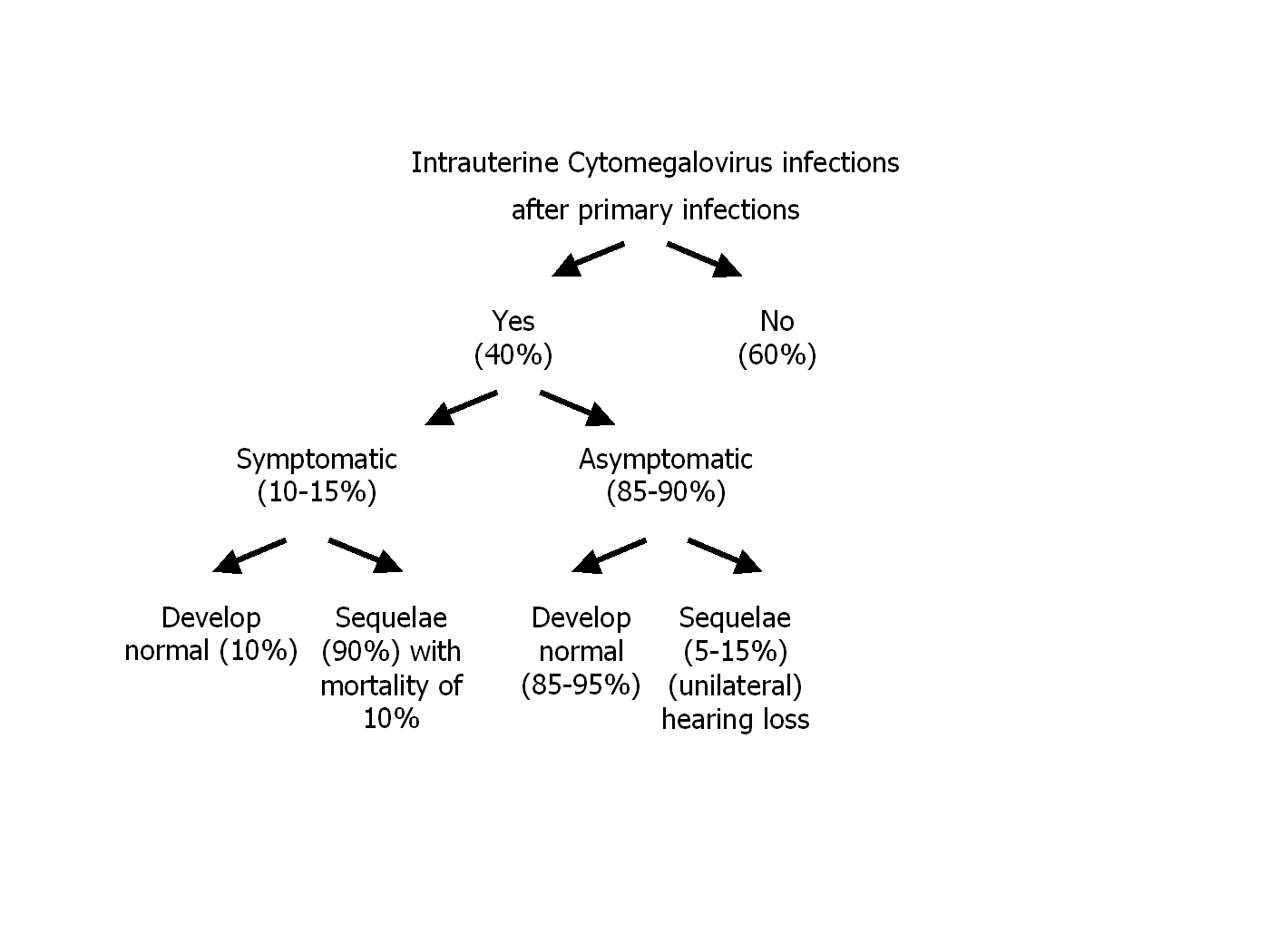 Maternal symptoms:
Incubation period 4-8 weeks. Most common asymptomatic or mononucleosis-like symptoms can develop specially in immuno-incompetent mothers. Intrauterine infections after primary infections occur in 33% in the first trimester and 44% in the third trimester. 7% of woman with primary infection will have badly damaged fetus with congenital CMV. CMV can be present in breast milk with between 25% and 70% of seropositive women shedding CMV in some stage. CMV is rarely found in colostrum. If CMV is isolated in the milk, the risk of acquisition of infection is high (50 percent) but sequelae for child small. In case of congenital cytomegalovirus infection half of the mothers have a primary infection. More than half of mothers have antibodies against CMV. Contagious only if intimate contact (kiss, coitus, labor, breastfeeding, etc.) CMV shedding in the saliva and urine in day care centers from 10-80 %. Infected infant excretes virus in saliva and urine for several years. Transmission: More likely to these who shed CMV from the cervix or the vagina at the time of delivery and estimated 50% of infants born to these mother can acquire the infection. Repeat infection of an infant in the next pregnancy is extremely seldom. Infections postpartum are harmless. The extremely premature infants have been identified as a risk for severe infections. Ultrasound Markers: Cerebral ventriculomegaly. Micro cephalic hyper-echogenic bowel hepatosplenomegaly, ascitis, intracranial calcification, IUGR but normal ultrasound does not exclude neonatal abnormality. One half of symptomatic infants will present with the syndrome of cytomegalic inclusion diseases, consisting of: Virus demonstrated (Virus culture, CMV-ANA(PCR) or CMV-IgM) (urine, blood, tissue) the first 2 weeks after delivery indicates congenital infection. It takes normally one to three days of incubation to get the answer for culture. CMV-IgM can be demonstrated in 70% of infants with congenital CMV and in all who later develops sequelae. However, confirmatory virul culture still must be performed because of false-positive and false-negative results occur. CMV DNA, using PCR probably identify the infants that need to be followed up for neurological assessment and hearing loss. PROPHYLAX No risk to staff if normal hygiene is achieved. Do not kiss other children on the mouth and do not taste the spoon during feeding. Do not eat the children's leftover. Treatment: No treatment recommended, but promising results has been found on preventing a high percentage of later hearing loss with treatment with ganciclovir of newborns. The use of anti-CMV hyperimmune globulin for treatment and preventing of congenital infection are promising. Valganciclover and immunoglobulin seems promising if CNS signs present at birth, such as retinitis, hearing loss, sepsis and refractile thrombocytopenia. References: (1) Allan McLean, et al. Infection and Pregnancy, RCOG Press 2001. (2) Duff, P. A thoughtful algorithm for the accurate diagnosis of primary CMV infection in pregnancy. Am J Obstet Gynecol 2007 (3) Guerra B. Impact of diagnostic and confirmatory tests and prenatal counseling on the rate of pregnancy termination among women with positive cytomegalovirus immunoglobulin M antibody titers. Am J Obstet Gynecol 2007 (4) www.infpreg.com (5) www.uptodate.com 2007
Feel free to mail me |
Dette dokument er flaget "Muligt forældet"
Find siden via vejledninger
